
Botanical Wisdom
Art, Science, and Nature in Muslim Societies: A Participatory Research Project
About the Project
This participatory research project (funded by Collections-Connections-Communities and the Centre of Islamic Studies, University of Cambridge) took place over 12 weeks, from June – August 2025. Bringing together 10 participants from diverse academic, community, and creative backgrounds, the project focuses on the theme of plant life in Muslim societies—past and present—through an interdisciplinary lens. At the heart of the project are the Islamic collections of the Fitzwilliam Museum, the Cambridge University Library, and the University Botanic Gardens and Herbarium.
The goal of the project is to uncover the rich narratives of plant lives, both as part of the natural environment and in their intersections with the human experience. For instance, plants have long been central to the human diet and medicine, are associated with symbolic and magical properties, and serve as a source of artistic inspiration in architectural decoration and portable objects.
Through engaged workshops with curators, artists, and subject specialists, the participants explored the representation of plants in ceramics, examining both abstract and naturalistic forms. We closely studied plants discussed and depicted in scientific and medical manuscripts, including knowledge traditions inherited from the Greeks, as well as texts addressing the magical and occult properties of plants and the genre of Prophetic medicine. Discussions also considered the role of gardens and botanical illustration in supporting the physical and mental well-being of societies.
Participants experimented with recreating historical plant-based inks and took part in a range of artistic and reflective activities. They shared their own experience of plants and gardens, highlighting those still used for medicinal purposes, and the distinctive planting and landscape design of the Cambridge Central Mosque. The diverse and multiple participant narratives complemented the material objects, connecting the stories of the past with lived experiences in the present. Through object stories and oral traditions, the power, wisdom, and enduring inspiration of plants emerged as central themes.
By the end of the project, we achieved our two main goals. First, as a group, we critically engaged with historical worldviews, aesthetic practices, and knowledge-making traditions connected to plants and the natural world. Second, the project created opportunities for Muslim community members to connect with their heritage, reflect on its meanings today, and contribute their own voices through creativity and discussion. This project reminded us that plants are far more than a backdrop in our lives—they weave together art, faith, science, healing, and community.
This website documents the workshops, the participants and their reflections, and the objects from the Cambridge collections.
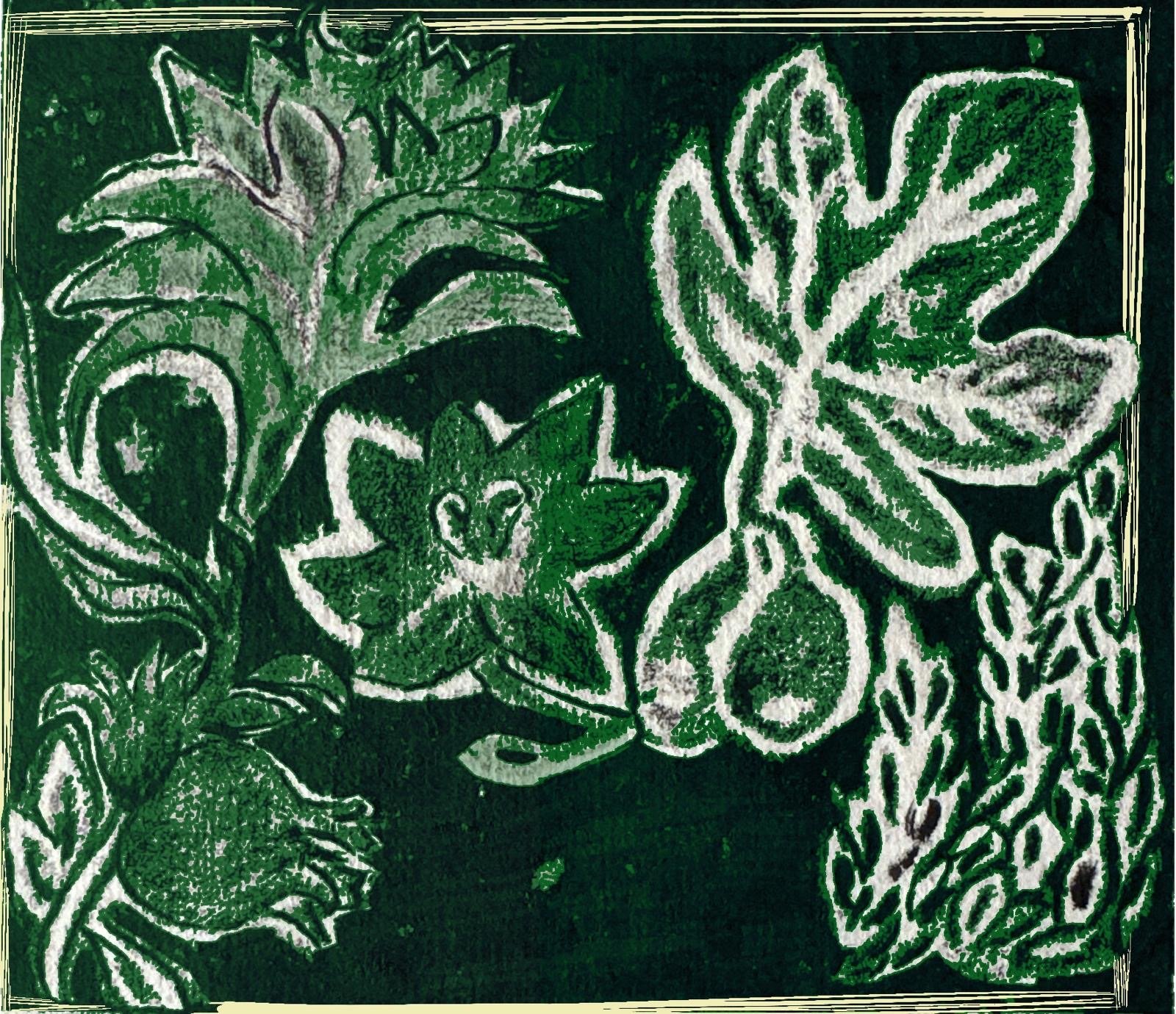
Artwork by Sondos Shehadeh (plants L-R: pomegranate, safflower, saffron, fig, lavender)
Acknowledgements
Header logo: Sondos Shehadeh
Website design: Olivia Bevan
Project lead: Dr Zahra Kazani
-
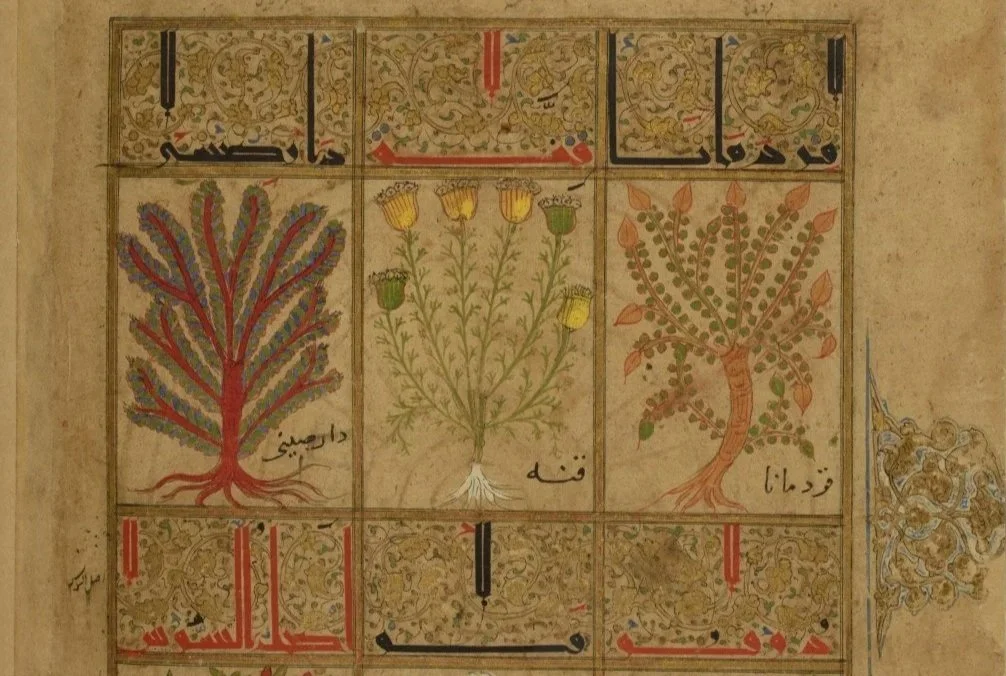
Botanical wisdom workshops
Explore sessions and workshops from the botanical wisdom project.
-
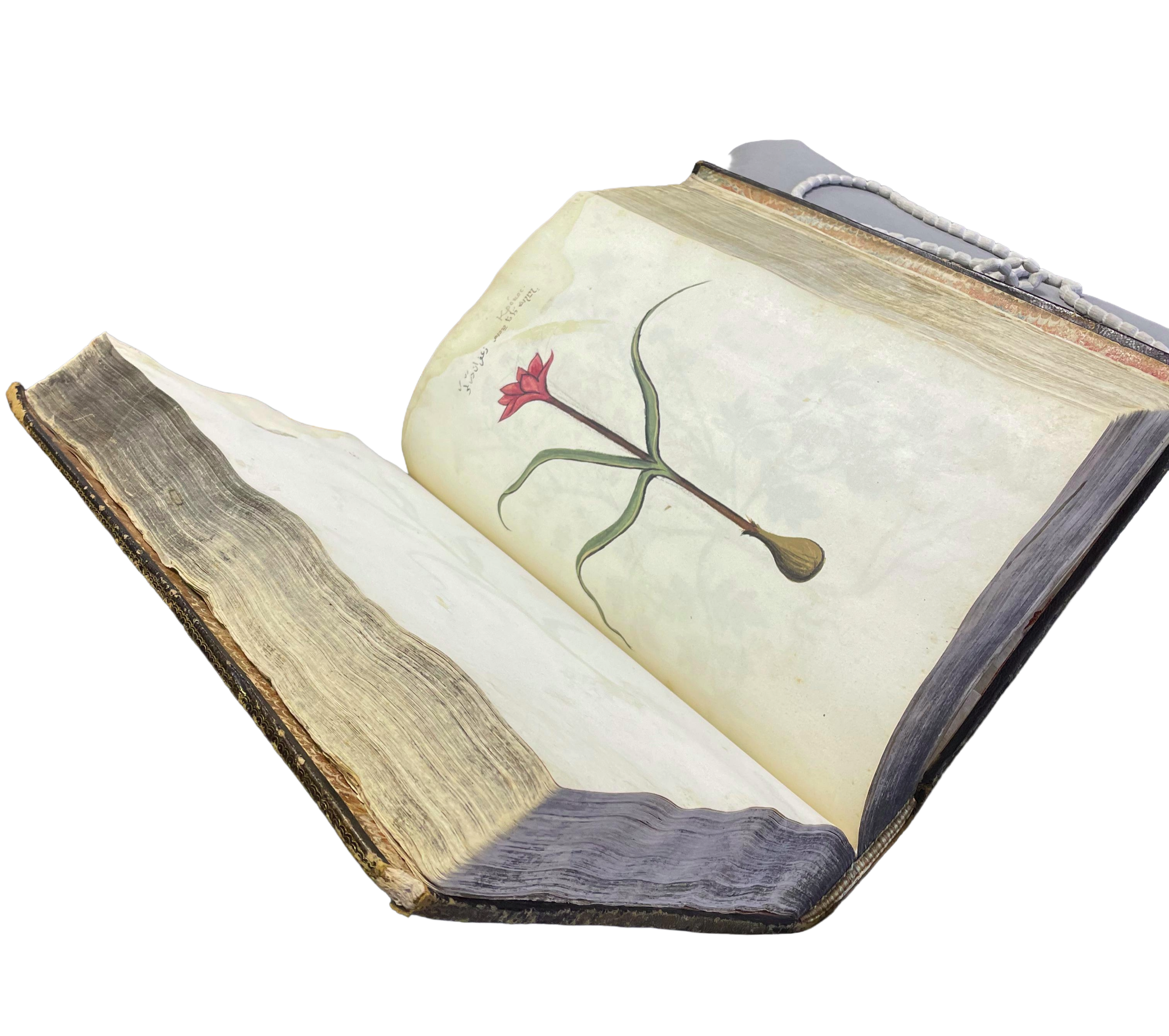
Objects and their histories
Learn more about the objects we explored in this project and their histories.
-
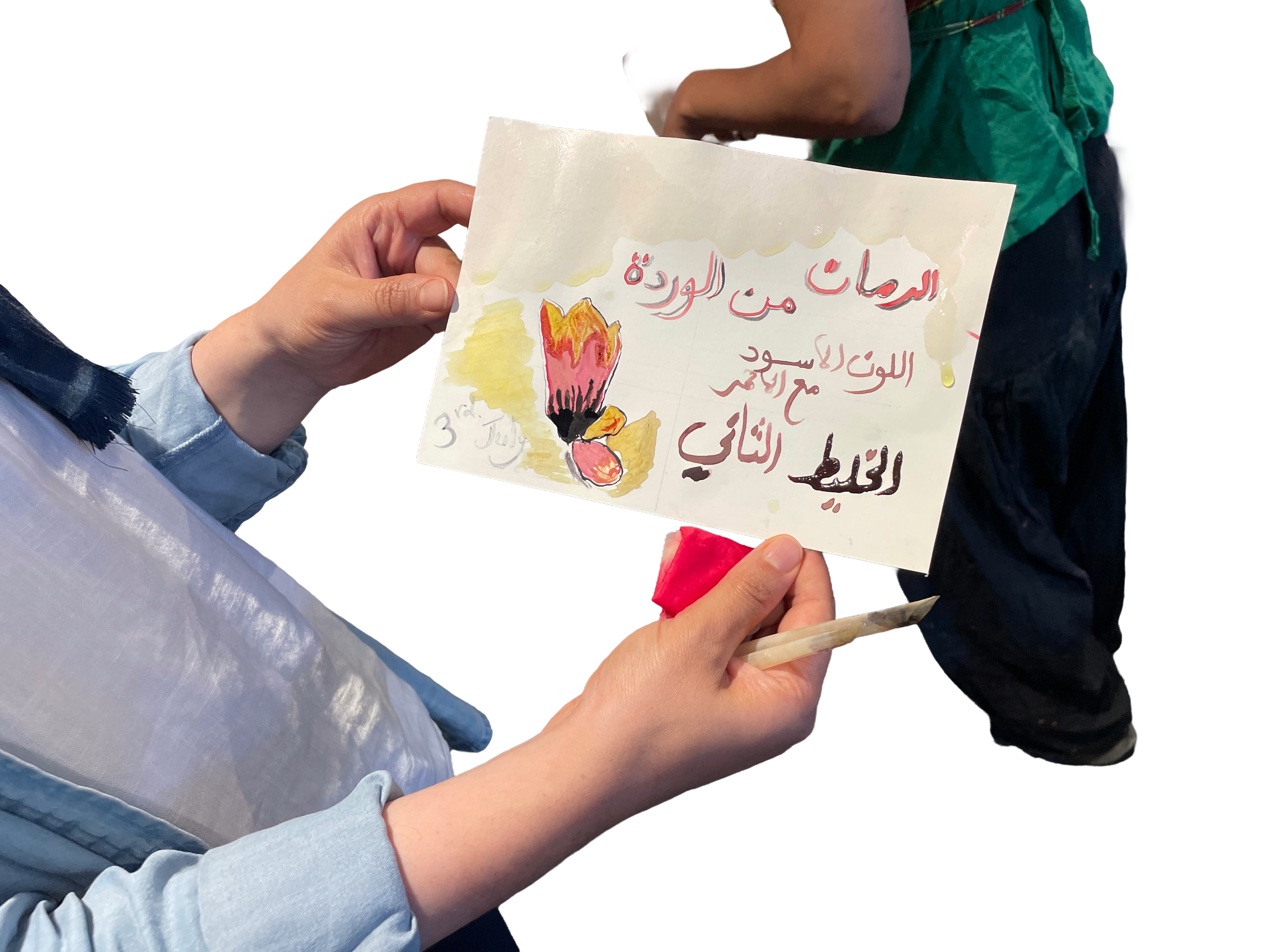
Participant stories
Learn more about the experience and creative outputs from our participants.